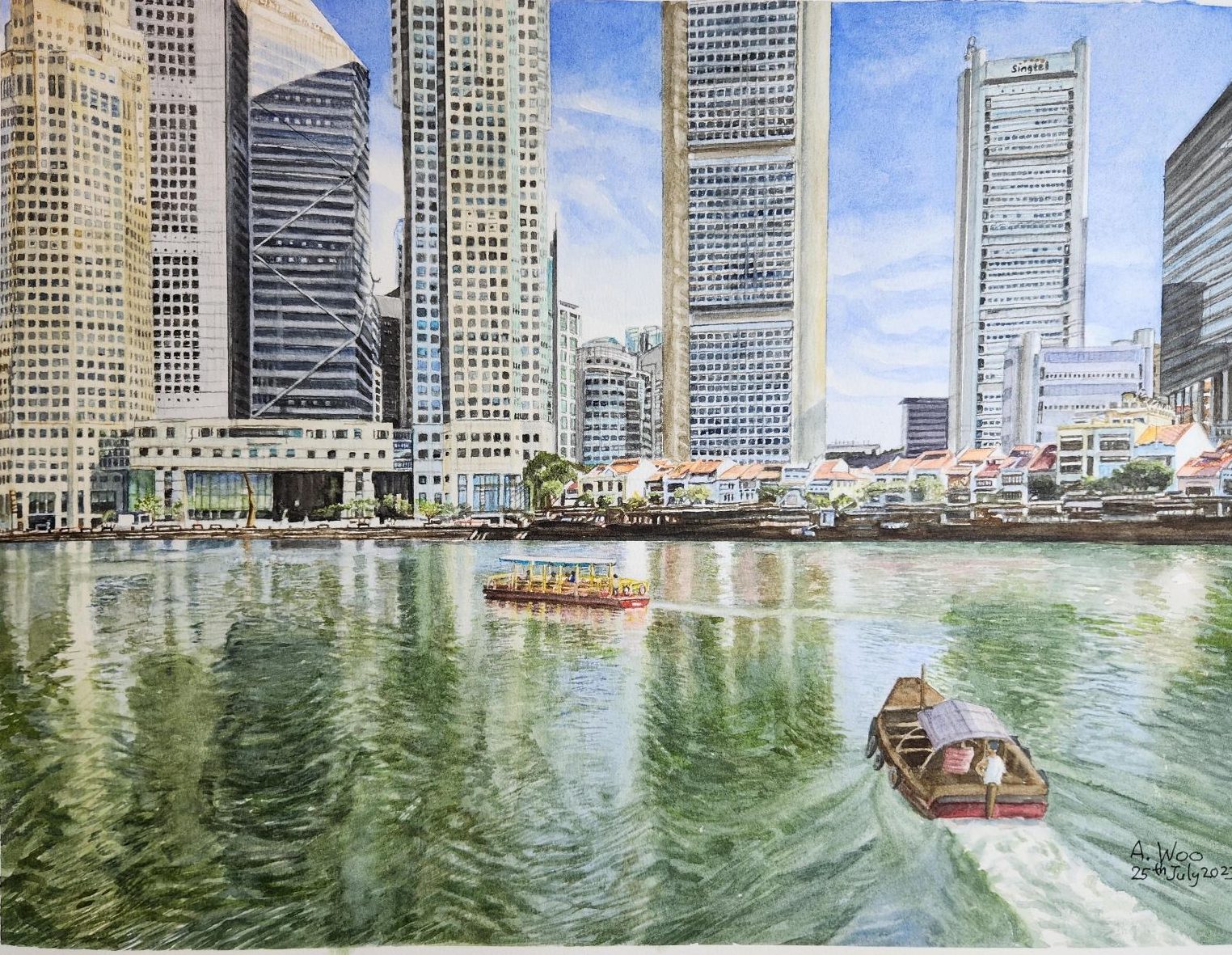
River of No Return
Long gone were days of busy activities
In moving commodities
Much were moved using bum boats
Into store or moved afloat
Such means secured livelihood
Serving us, our lives were good
Prosperity found new ways
For bum boats call it a day
Ships now call at jetties
Containers & cranes plenty
Handle cargoes really fast
Making our port world class
Bum boats & bare bodied men
Toiled over years count in tens
From hard labour rest now earned
Left river flow no return.
Anthony Woo
River of No Return
I describe the collection of scenes of the Singapore River as ‘River of No Return’.
The bum boats are now gone. These used to line both banks of the river, leaving a passage wide enough for them to maneuver up and down the river, ferrying goods between warehouses and ships in anchorage.
This modus operandi could not be sustained as trade volume grew. Maritime logistics gradually grew and advanced with 20-foot and 40-foot containers in which goods were stored and shipped. Jetties were built to enable ships with containers on their deck to berth directly. Massive cranes plough along the jetty lifting and stacking the containers on paved grounds adjacent to the water front.
Development in trade brought changes to the river, it transited from the days when the boats were queuing for their jobs to when they were left in idleness, and finally redundancy. The government whose offices and parliament buildings were on the opposite bank from the go-downs, decided they had enough of the foul smell coming from the river during low tides. The decision was made to clean up the river. The scene of exciting activities, shouts of stevedores and straining noises of bum boat engines, was gradually transformed into relative peace and quiet. Reflections of buildings are now less disturbed by waves created in the wakes of regular boat movements.
 Anthony Woo Art